
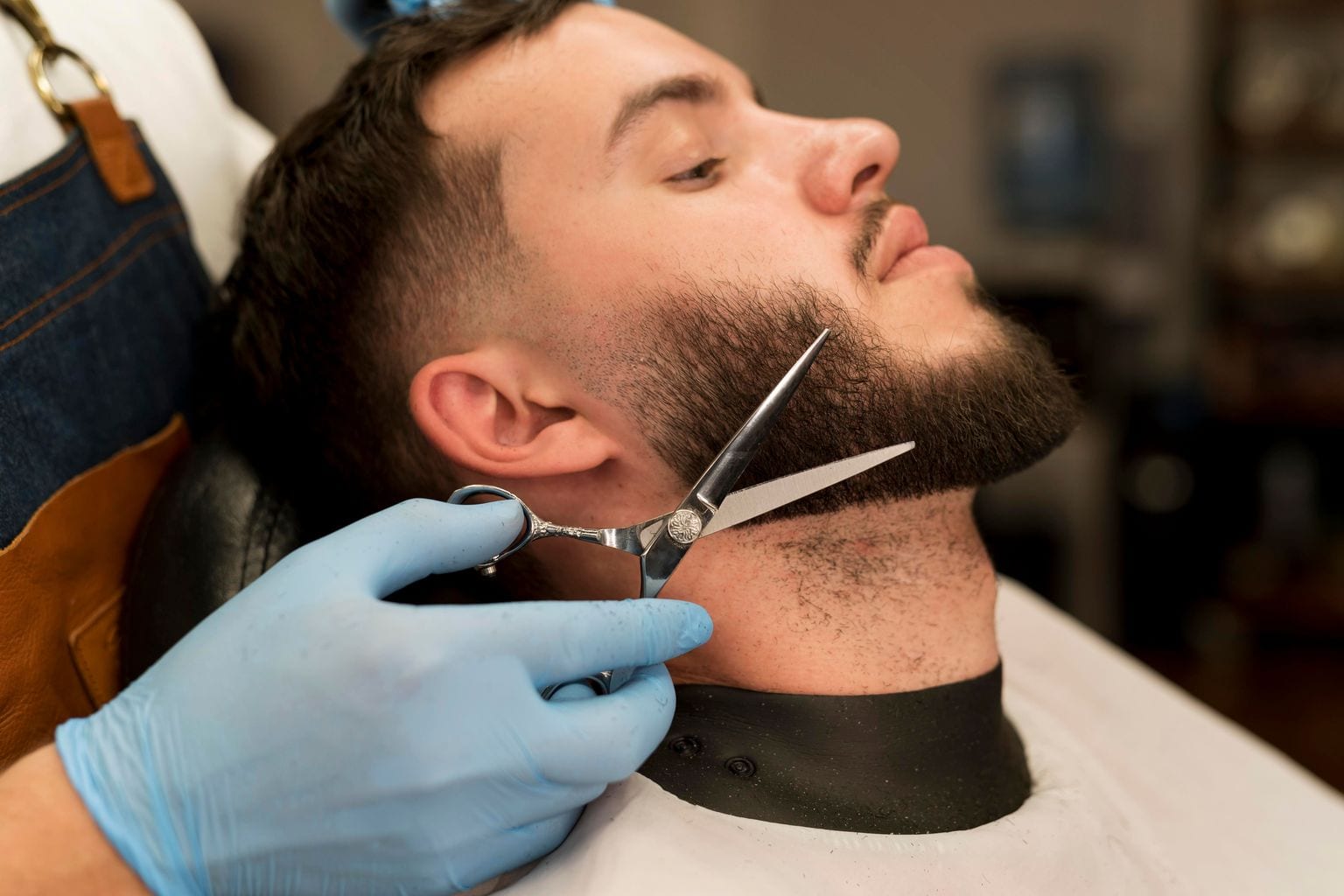
If your beard has started looking a bit softer at the edges and the skin underneath feels tighter or itchier than it did in September, you are not imagining it. Cold air dries out facial skin, and a beard that has grown past the neat phase hides that dryness until it starts to flake or itch. A professional scissor trim does two jobs at once: it sharpens up the shape you have grown all year, and it gives your barber a proper look at the skin underneath, so small problems get caught before they become bigger ones.
This is exactly what you see in a proper scissor-detailing session, a barber working with careful, deliberate snips rather than running a trimmer over the whole thing on a guard setting. That precision matters more once the weather turns, not less.
Why does my beard get itchier when the weather turns colder?
The short answer is that your skin produces less of its own oil in winter, and both outdoor cold and indoor heating pull moisture out of your skin at the same time. A feature on dry skin in winter from Patient.info explains that
your "summer skin" tends to be thinner and more hydrated as warm air holds more moisture, and your oil-producing glands produce more natural oils that keep your skin supple
. In winter,
sebum production reduces, and combined with the cold and wind, the drying effect may be too much for your skin to cope
.
A dermatologist quoted in the same piece puts the UK climate bluntly:
"Winter conditions in the UK can be a perfect storm for dry irritated skin"
, adding that
both the winter weather and central heating strip skin of moisture, and woolly winter fabrics can cause irritation
.
Under a beard, this can show up as what the same feature calls winter itch, which
occurs during winter when the skin dries out so much that it becomes itchy and uncomfortable, resulting in red rashes, scaly skin, or bumps
. The reassuring part is that it is usually temporary and
can be soothed by moisturizing the skin regularly, and sometimes by avoiding clothing made from wool or flannel, which may irritate it
.
Cleveland Clinic dermatologist Dr Alok Vij names dry skin as one of the most common causes of an itchy beard in his piece on what may be causing an itchy beard. He explains that
cold weather or dry conditions outside can cause your skin to be dry, a condition known as xerosis
, and that certain medications, shampoos and soaps can play a part too. His advice is simple:
work a face moisturizer into your beard and the irritated skin under it, since oil-based moisturizers typically hold more moisture than water-based versions
.
If the itch is persistent, sore or spreading rather than simple seasonal dryness, that is a job for a pharmacist or your GP rather than a grooming fix. We cover the same cold-air drying effect on the head in our piece on dry, itchy scalp in autumn.
Why does a scissor shape-up matter more once the air turns dry?
A beard that is growing shaggy and uneven traps more of everything against your skin, dead skin cells, product, moisture that cannot escape. The American Academy of Dermatology's guide to healthy beard care is direct about what happens when that skin is left unmoisturised:
without moisturizer, the skin beneath your beard can become dry, flaky, and itchy
, and when that happens, the beard itself can feel dry and prickly.
This is where a scissor trim earns its place over a quick once-over with clippers. Scissor work lets a barber lift and separate the hair section by section, rather than mowing it flat on a single guard length. That means they can see the skin as they go, which matters when dry or flaky patches hide under denser growth. It also means the finished shape follows your actual beard pattern instead of a uniform length that ignores how your hair grows at the jaw, cheek and chin.
The Academy's own trimming guidance backs scissors for anyone with a longer beard, recommending that you
apply a shaving oil, cream, or gel before trimming your beard and use an electric razor to trim it
, but that
if you have longer facial hair, you can also use scissors to trim
. A barber combines both tools with practised judgement, something that is genuinely difficult to replicate with a bathroom mirror and a trimmer held at arm's length.
Combing matters here too. The same dermatologist guidance recommends
using a beard comb to detangle, style, and comb out the hairs when trimming your beard with scissors
, which is standard practice in any proper scissor shape-up at the chair.
How does a professional trim actually help manage the itch?
A scissor shape-up will not cure dry skin on its own, but it removes one of the biggest obstacles to managing it, overgrowth that hides the problem and traps moisture against the skin.
When your barber shapes the beard properly, three things happen that help:
- ◆The skin gets exposed and checked. A barber working methodically through the beard with scissors will spot patchy flaking, redness or uneven growth that you would not notice in a mirror.
- ◆Trapped debris gets removed. Longer, unshaped beard hair holds onto dead skin cells and product residue, so a clean shape reduces the amount sitting directly on irritated skin.
- ◆Your home routine gets easier. It is far simpler to work a moisturiser or beard oil evenly into a well-shaped beard than into an overgrown, tangled one.
On the home-care side, the AAD's three-step plan for healthy facial hair is worth following between visits, starting with washing. As the guidance puts it,
washing removes the dirt, oils, germs, pollution, and dead skin cells that build up on your beard and skin every day
, and when you don't wash them away,
they can clog your pores and irritate your skin
. Moisturizing straight afterwards matters just as much, since, as the same dermatologists note,
moisturizing can help soften the skin and beard hairs
.
If you are already doing all of this and still getting flaking or soreness that does not settle, that is a sign to see a pharmacist or your GP rather than relying on grooming changes alone.
How often should you get your beard shaped as the weather cools?
There is no need to change your whole routine for autumn, but it is worth tightening it up slightly.
For most maintained beards, a shape-up every four to six weeks keeps the neckline, cheek lines and overall outline sharp. If you are running a shorter, tighter style, coming in every three to four weeks keeps the lines consistently crisp rather than letting them soften between visits, which matters more when dry skin is already making the beard feel coarser underneath.
If you are growing a beard out through the colder months, do not wait until it is "finished" to get it looked at. Our guide on growing a beard out covers why a barber can tidy the edges and advise on shape even mid-growth, which is especially useful in autumn when uneven patches are more noticeable against drier skin.
The neckline is worth a specific mention here too, since it is one of the lines that slips fastest when you leave it between visits. We go into this in more detail in our piece on beard neckline upkeep in autumn, but the short version is that a clean, correctly placed neckline makes the whole beard look sharper without changing the length or style at all.
What can you do between barbershop visits?
A few simple habits make a real difference to beard comfort once the air turns dry and cold:
- Moisturize the skin, not just the hair. Work a facial moisturiser or beard oil into the skin underneath, not just over the surface of the hair, since that is where the dryness actually sits.
- Keep washing gentle but consistent. A daily or near-daily wash with a gentle cleanser helps clear the build-up that cold weather and central heating make worse.
- Avoid scratchy fabrics against your face. Wool scarves and collars pulled up over the chin can aggravate already dry skin.
- Do not over-wash with harsh soap. Stripping natural oils further will make dryness worse, not better.
- Book a shape-up rather than reaching for the trimmer yourself. A professional scissor trim resets the shape and gives you a clean base to keep moisturized properly.
None of this replaces medical advice. If you notice persistent redness, soreness, spreading flaking or anything that looks infected, speak to a pharmacist or your GP rather than trying to manage it with grooming products alone.
Visiting Georges Barbers for a beard shape-up
We have been shaping beards at 11 Chesham Road in Amersham since 1991, and the scissor work shown in a proper trim is exactly the kind of detailed, unhurried approach we take with every client. You can read more about our beard grooming service or see the kind of detail we go into on our main beard grooming guide.
Walk-ins are welcome for beard trims and shape-ups seven days a week, no appointment needed. If you would rather lock in a specific time, online booking is open Monday to Friday.
We see regulars from right across the area, including Chesham, Great Missenden, Little Chalfont, Beaconsfield, Chorleywood, Chalfont St Giles, Gerrards Cross and High Wycombe, as well as plenty of local faces here in Amersham. However you get here, book your visit and let a proper scissor shape-up take the shagginess out of your beard before the weather gets any colder.