
- What actually goes wrong in the awkward stage?
- Why does a growing beard itch?
- Is it beard dandruff, and what do you do about it?
- What can you do about the patchy bits?
- Should you keep getting it shaped while it grows?
- How do you avoid ingrown hairs and spots underneath?
- What should you actually be doing every day?
- When is it long enough to shape properly?
- Booking and walking in
- Sources
September is beard season in a barbershop. The men who shaved it all off in June come back in with a week of growth and a plan.
Georges Barbers has been shaping beards on Chesham Road since 1991, and we can tell you where most of those plans fall apart. It is not week one and it is not month three. It is the messy bit in between.
What actually goes wrong in the awkward stage?
Two things at once: it stops looking deliberate, and it starts being uncomfortable.
For the first few days, stubble reads as a choice. Past that, before there is enough length for a shape, a growing beard sits in a stage where it looks unkempt rather than styled, and that is exactly when it tends to itch and irritate. Those two problems arriving together is why so many men shave it off and start the same cycle again the following year.
That is our observation from the chair rather than a research finding, and we would rather be clear about which is which. What the research does cover is the individual problems underneath it, and most of those are fixable.
Why does a growing beard itch?
Some of it is the hair itself, but a lot of what men blame on the beard is actually the skin underneath.
The American Academy of Dermatology describes two distinct problems that both present as itching. The first is dandruff under the beard, which shows up as "flakes dusting your beard, along with an itchy rash, scaly skin, or greasy patches beneath your beard". The second is ingrown hairs, which happen "when short, curly hairs curve back into your skin instead of growing out".
Those are different problems with different fixes, and neither is solved by scratching or by giving up.
Worth being straight about the limits here: the AAD guidance covers managing the irritation rather than explaining exactly why a beard itches at a particular length, and we are not going to invent a mechanism or a timeline to fill that gap. What we can tell you is that treating the skin usually helps more than treating the hair.
Is it beard dandruff, and what do you do about it?
If there are flakes in the beard and greasy or scaly patches on the skin beneath it, treat it as dandruff rather than dryness.
The AAD sets out a three-step approach:
- Brush the beard every day before you wash your face
- Treat the rash and greasy patches with hydrocortisone 1% solution
- Shampoo the beard and the scalp at least once a week with a dandruff shampoo containing zinc pyrithione, ketoconazole or selenium sulfide
The detail people miss is the scalp part. Beard dandruff and scalp dandruff tend to travel together, because they are the same problem on different real estate. Treating one and ignoring the other rarely works, which is also why this post and the autumn scalp guide end up recommending the same shampoo aisle.
What can you do about the patchy bits?
Less than the internet promises, and the honest answer is worth having early rather than after six months of disappointment.
The AAD is direct about the cause: "Your genes determine whether you develop thin, sparse areas in your beard." That is not a moral failing or a grooming mistake, and no amount of brushing or oil will change it.
What the AAD suggests instead is working with it rather than against it. Choose a beard style that flatters what you actually grow, or let the beard grow longer so that the length from denser areas covers the sparse ones. They also note that minoxidil is something to discuss with a dermatologist, which puts it firmly outside what a barbershop should be advising on.
The barbering version of that advice is simpler. A patchy beard at an early stage tells you very little, because the density you end up with depends on length and on how the hair lies once there is enough of it. Judging it too early is the mistake.
Should you keep getting it shaped while it grows?
Yes, and this is the single thing that most changes whether a beard survives the awkward stage.
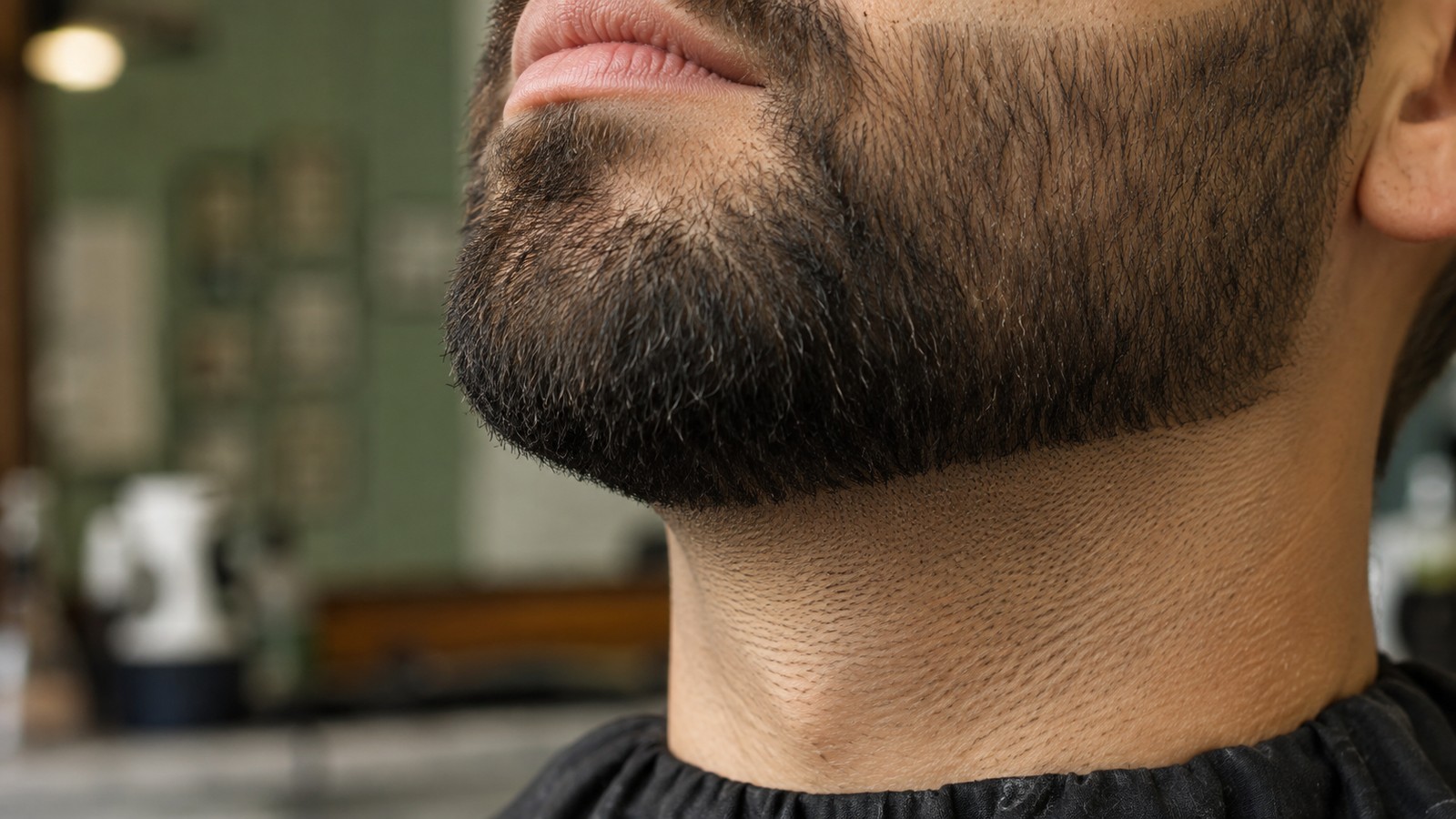
There is a persistent idea that growing a beard means not touching it for months. In practice that produces a beard that grows outward in every direction and looks like neglect rather than intent. The parts that need controlling while you grow are the edges, not the length:
- The neckline, which is what separates a beard from a general absence of shaving
- The cheek line, kept honest rather than drawn artificially high
- The moustache, which grows into the mouth long before the rest of the beard is ready
- Any stray length that breaks the outline
Leave the bulk alone and let it grow. Keep the boundaries clean and the same beard suddenly looks like a decision. At Georges we do beard trims, reshapes, tidies and moustache work, and a growing-out tidy is a normal request rather than an odd one. There is more on what each involves on the beard grooming page and in the beard grooming guide.
How do you avoid ingrown hairs and spots underneath?
Change how you handle the edges, because that is where both problems come from.
For ingrown hairs, the AAD's advice is about technique: shave after showering, use a pre-shave product and a fragrance-free shaving cream, shave in the direction the hair grows rather than against it, rinse with lukewarm water, pat dry gently and moisturize afterwards. Going against the grain for a closer finish is the most common cause of the problem.
For spots under the beard, the AAD explains the mechanism plainly: "Beard hairs trap oil from your skin, dead skin cells, and bacteria next to your skin." Their advice is to keep your hands off your face, wash twice daily, and use a non-comedogenic beard conditioner rather than a heavy one.
For trimming during the irritable early phase, the AAD suggests applying a shaving oil, cream or gel first and using an electric razor. They also recommend changing razor blades every five to seven uses, which is more often than most men do it.
What should you actually be doing every day?
Very little, but consistently.
The AAD's baseline is to "wash your face and beard every day", because the beard traps dirt, oils, germs, pollution and dead skin cells against the skin. During early growth, when irritation is at its worst, they suggest using a gentle exfoliating scrub once or twice a week and moisturizing immediately afterwards.
That is genuinely the whole routine. Wash daily, exfoliate lightly a couple of times a week, moisturize after, brush it, and treat flaking if flaking appears. Anything beyond that is optional and mostly about how you want it to look rather than whether it survives.
When is it long enough to shape properly?
When there is enough length for a barber to build an outline rather than just tidy an edge, and that point differs from beard to beard.
There is no universal length, because it depends on how dense your growth is, how the hair lies, and what shape you are aiming at. A short, sharp beard needs far less length than a fuller one. The practical approach is to come in while it is growing, get the boundaries kept clean, and let the barber tell you when there is enough there to actually shape.
Bring a photo if you have something in mind, and be ready for an honest conversation about whether your growth pattern will get you there. A barber who tells you a particular shape will not work on your beard is doing you a favour.
Booking and walking in
Walk in any day of the week for a beard trim, haircut or skin fade at 11 Chesham Road, Amersham. No appointment needed.
If you want a set time, book online Monday to Friday. Ear piercing is the one service that always requires an appointment.
Plenty of men pair a beard tidy with a cut in the same visit, which is the easiest way to keep both sharp. Full details are on the beard grooming page, and clients travel in from Amersham, Beaconsfield, Gerrards Cross, Chalfont and Chesham.
Come in while it is growing, not after you have given up on it.
Sources
- American Academy of Dermatology, DIY treatment for 5 common beard problems
- American Academy of Dermatology, A dermatologist's top tips for a healthy beard
Frequently Asked Questions
Why does my beard itch while it is growing?
Often it is the skin rather than the hair. The American Academy of Dermatology describes two separate causes that both itch: dandruff beneath the beard, which brings flakes and greasy scaly patches, and ingrown hairs, which occur when short curly hairs curve back into the skin instead of growing out.
How do I treat flakes in my beard?
The AAD advises three steps: brush your beard daily before washing your face, treat the rash and greasy patches with hydrocortisone 1% solution, and shampoo both beard and scalp at least weekly with a dandruff shampoo containing zinc pyrithione, ketoconazole or selenium sulfide.
Can I do anything about a patchy beard?
Not about the cause. The AAD states that your genes determine whether you develop thin, sparse areas. Their practical advice is to pick a style that flatters your growth, or grow it longer so denser areas cover sparse ones. Minoxidil is a question for a dermatologist.
Should I trim my beard while growing it out?
Keep the edges, leave the length. Controlling the neckline, cheek line and moustache while the bulk grows is what makes a growing beard look deliberate rather than neglected. Leaving everything untouched for months is the most common reason a beard gets abandoned halfway.
How do I stop ingrown hairs in my beard?
Mostly by changing technique. The AAD advises shaving after showering, using a pre-shave product and fragrance-free shaving cream, shaving in the direction of hair growth rather than against it, rinsing with lukewarm water and moisturizing afterwards. Change blades every five to seven uses.
Do I need an appointment for a beard trim?
No. Walk in any day of the week at Georges Barbers, 11 Chesham Road, Amersham, with no appointment needed for beard trims, haircuts and skin fades. Online booking is available Monday to Friday if you want a set time. Ear piercing always needs an appointment.
By the team at Georges Barbers, cutting hair in Amersham since 1991.